

When decorating a bedroom, the ceiling is often the last surface people think about. Walls receive artwork, floors get beautiful finishes, and furniture becomes the main attraction. Yet the ceiling has just as much potential to change how the entire room looks and feels.
A thoughtfully designed bedroom ceiling can make a compact space feel more open, add architectural character to a plain room, or bring a sense of elegance to a large master bedroom. You do not always need an elaborate construction project, either. Sometimes a fresh paint color, decorative molding, or natural wood finish is enough to make the room feel completely different.
The best design depends on your ceiling height, bedroom size, interior style, and budget. From timeless coffered panels to contemporary geometric details, these bedroom ceiling design ideas offer inspiration for creating a space that feels considered from top to bottom.
20 Bedroom Ceiling Design Ideas Worth Considering
1. Create a Modern Look with a Layered False Ceiling

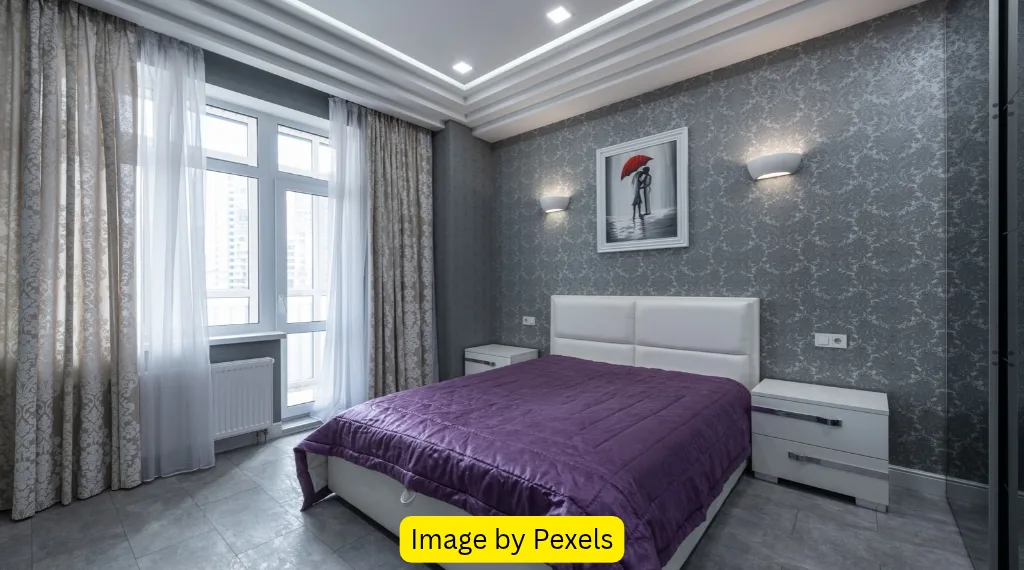
A layered false ceiling adds architectural depth by introducing a secondary ceiling structure beneath the original surface. It can feature simple rectangular borders, stepped levels, or a central recessed section.
This style works particularly well in contemporary bedrooms where clean lines and understated details are preferred. You can keep the finish white for a seamless appearance or introduce a subtle contrast between the different levels.
Before choosing a layered design, consider how much ceiling height will be lost. A complicated structure may feel overwhelming in a room that already has a low ceiling.
Try this look: Choose two simple levels with a narrow border instead of several complicated shapes. The result can feel elegant without making the ceiling visually heavy.
2. Add Architectural Character with a Coffered Ceiling
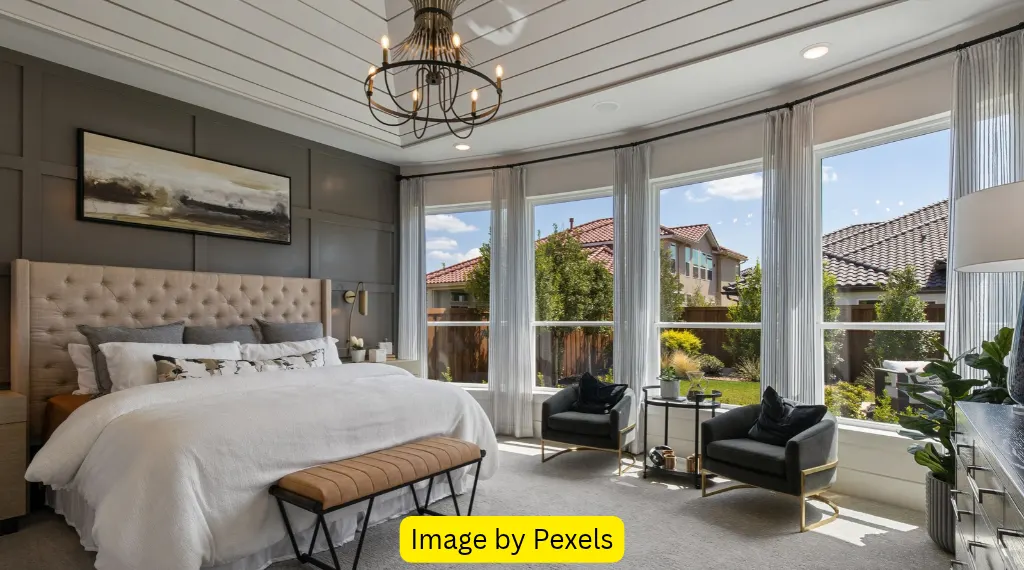
A coffered ceiling features a pattern of recessed square or rectangular panels separated by raised beams. It creates a structured appearance that feels especially at home in traditional, transitional, and sophisticated bedroom interiors.
Classic white coffers look beautiful with decorative wall molding and traditional furniture. For a more contemporary interpretation, consider natural wood panels or a combination of soft neutral colors.
Coffered ceilings can be particularly effective in larger bedrooms because the repeated pattern gives a broad ceiling a sense of proportion and detail.
Design tip: Keep the panel pattern aligned with the room’s layout. A well-proportioned design looks more refined than a ceiling filled with too many small sections.
3. Bring Natural Warmth with Wooden Ceiling Planks
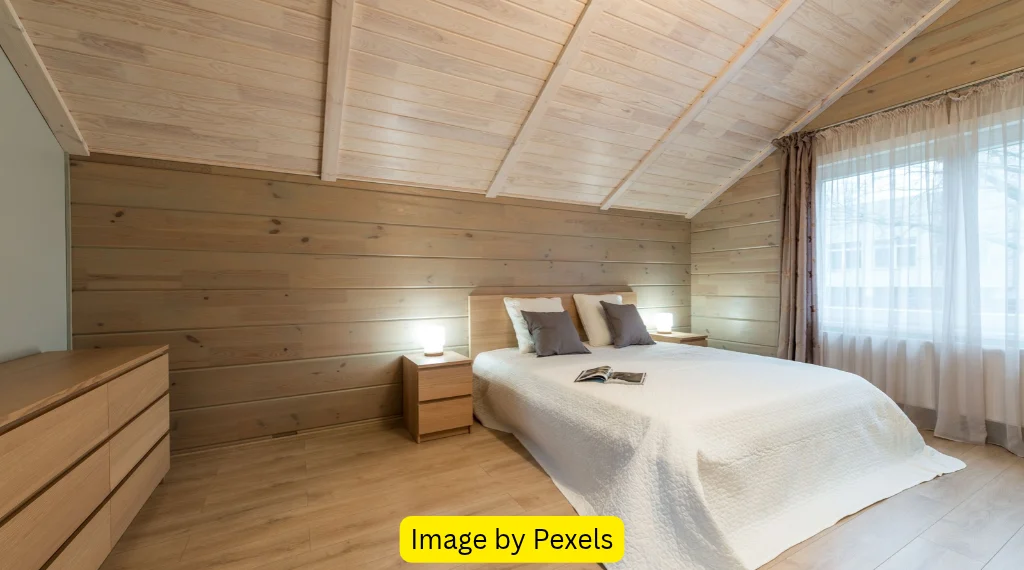
Wooden ceiling planks introduce warmth and texture that painted surfaces cannot always achieve. They are a beautiful choice for bedrooms inspired by Scandinavian, farmhouse, rustic, coastal, or organic interiors.
Light oak and pale natural finishes create an airy appearance, while walnut and darker stains bring richness and contrast. You can install the planks across the entire ceiling or use them over the bed to create a more focused feature.
Wood also pairs naturally with linen bedding, neutral walls, woven accessories, and simple furniture.
Best for: Bedrooms that feel too plain or need more natural texture.
4. Use a Tray Ceiling to Create Subtle Depth
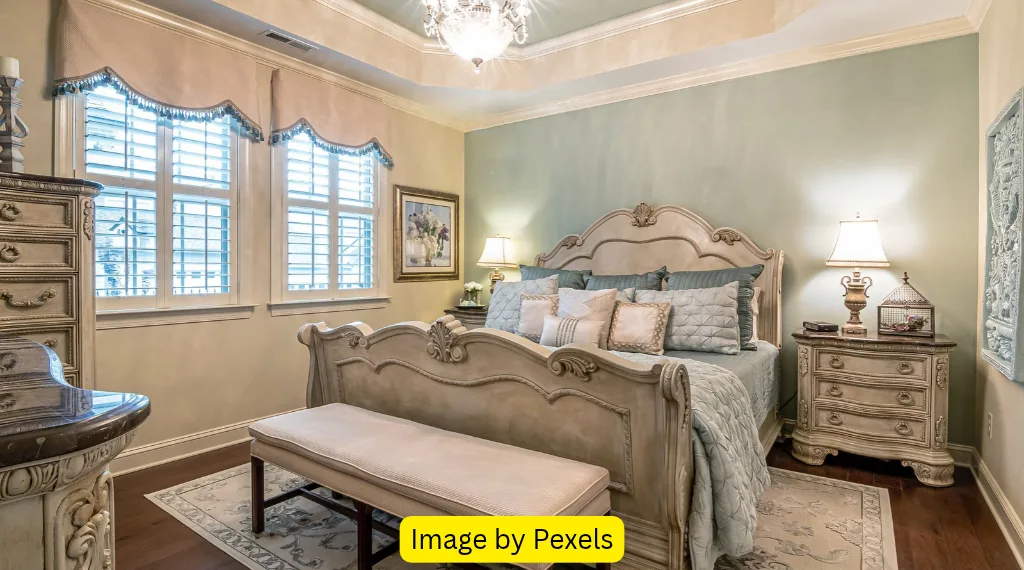
A tray ceiling has a raised central section surrounded by a lower perimeter, creating the appearance of an inverted tray. Its recessed border adds dimension without requiring an overly decorative design.
This style is especially attractive above a large bed because the central section can visually frame the sleeping area. You can leave the entire surface white or use a slightly deeper shade inside the tray.
A contrasting border can make the shape more noticeable, while a tone-on-tone finish creates a quieter result.
Try this look: Use a soft cream or warm white throughout the ceiling, then add a subtle color difference inside the recessed section.
5. Expose Wooden Beams for a Rustic Bedroom
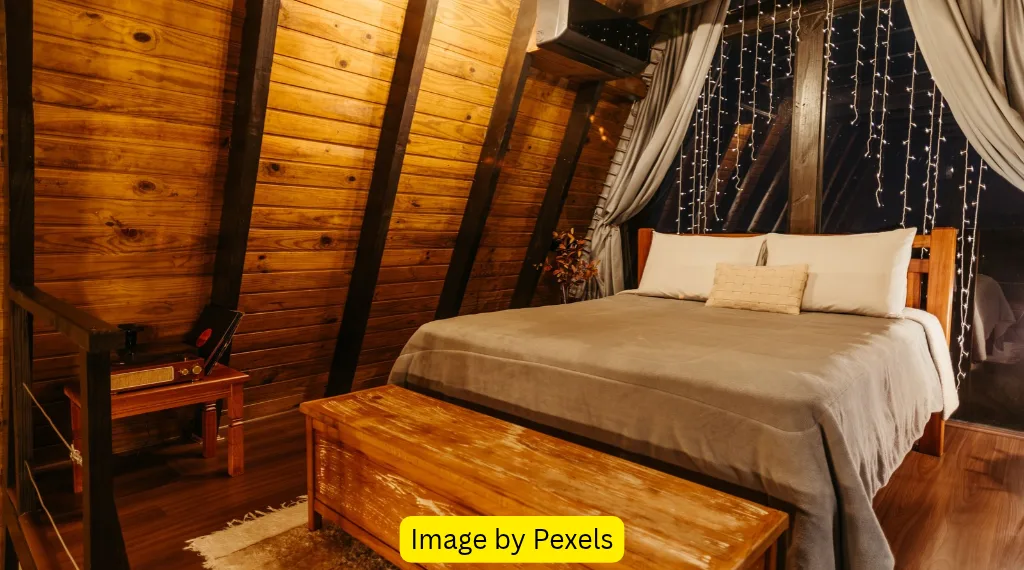
Exposed ceiling beams create a strong architectural feature and give a bedroom a sense of character. They are particularly suitable for farmhouse, cottage, rustic, and modern country interiors.
Natural wood beams offer an authentic, textured appearance. Painted beams can feel lighter and more contemporary, especially when paired with a white ceiling.
You can arrange the beams across the width of the room or follow the roof structure when working with a sloped ceiling.
If your home does not have structural beams, decorative faux beams may provide a similar appearance. Choose products suitable for the ceiling and have them installed securely.
Styling idea: Combine warm wood beams with simple bedding, natural fabrics, and understated wall colors so the ceiling remains the main feature.
6. Make a Statement with a Geometric Ceiling
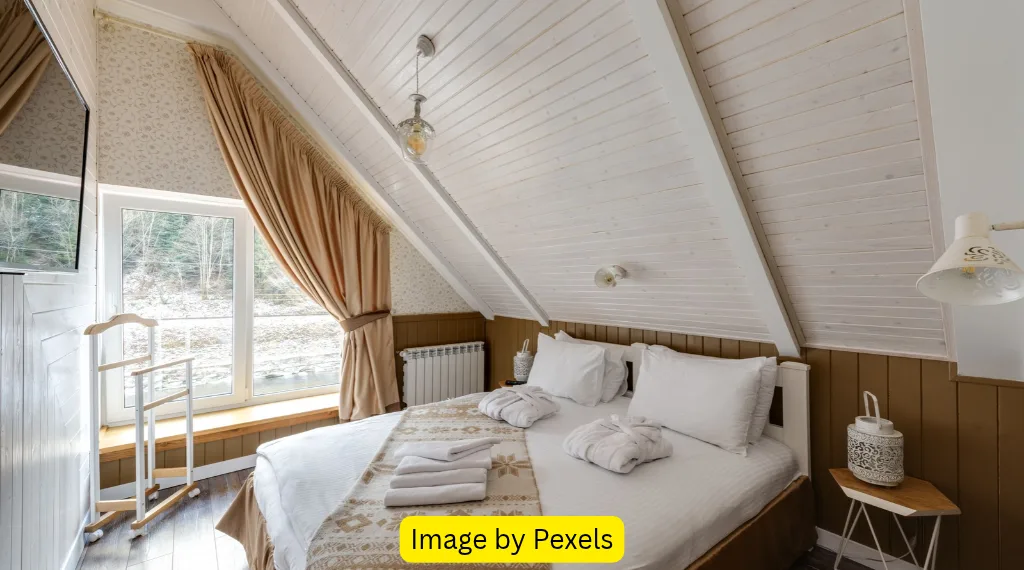
A geometric ceiling uses shapes such as squares, rectangles, lines, or intersecting panels to create a contemporary architectural feature.
It can be designed with decorative molding, wood panels, gypsum construction, or other suitable ceiling materials. The pattern may cover the entire surface or form a feature above the bed.
Geometric designs work especially well in modern bedrooms with simple furniture and uncluttered decor.
The key is proportion. Large patterns can make a spacious bedroom feel more structured, while smaller, intricate designs may look busy in a compact room.
Design tip: Choose one dominant geometric pattern and repeat its shapes subtly in other parts of the bedroom for a coordinated look.
7. Choose a Minimalist White Ceiling
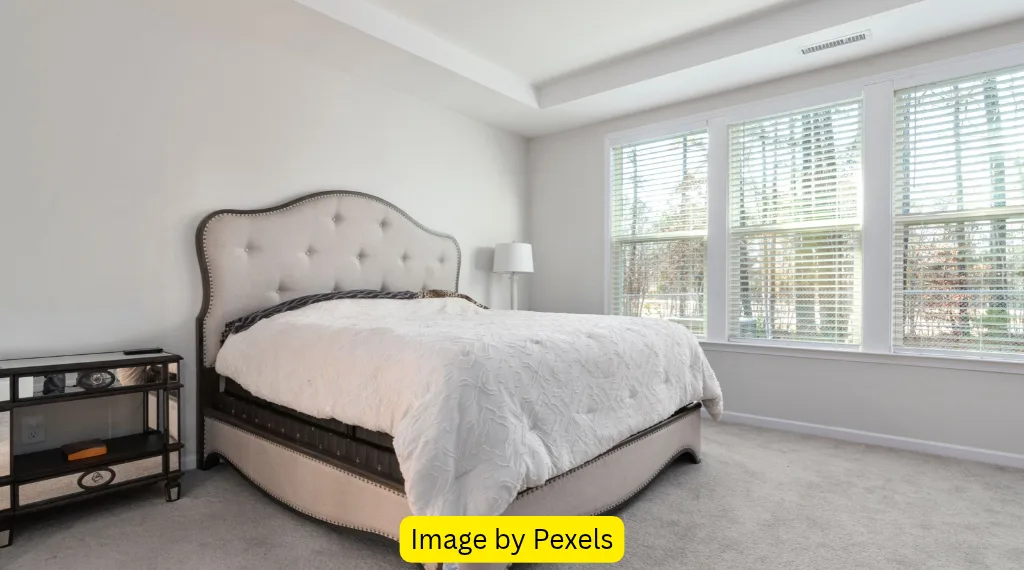
A plain white ceiling may sound simple, but it can be one of the most effective design choices for a bedroom. It keeps the room feeling open, reflects available light, and allows other interior features to take attention.
This approach works particularly well in small bedrooms, minimalist homes, and rooms with limited natural light.
A clean white ceiling also gives you more freedom to experiment with furniture, wallpaper, decorative lighting, and bedding without creating visual competition.
For a softer result, consider warm white rather than an extremely cool shade. The finish can be matte for a subtle appearance or another suitable finish depending on the surface and room conditions.
Best for: Small bedrooms, low ceilings, and interiors where simplicity is the priority.
8. Paint the Ceiling a Deep, Dramatic Color
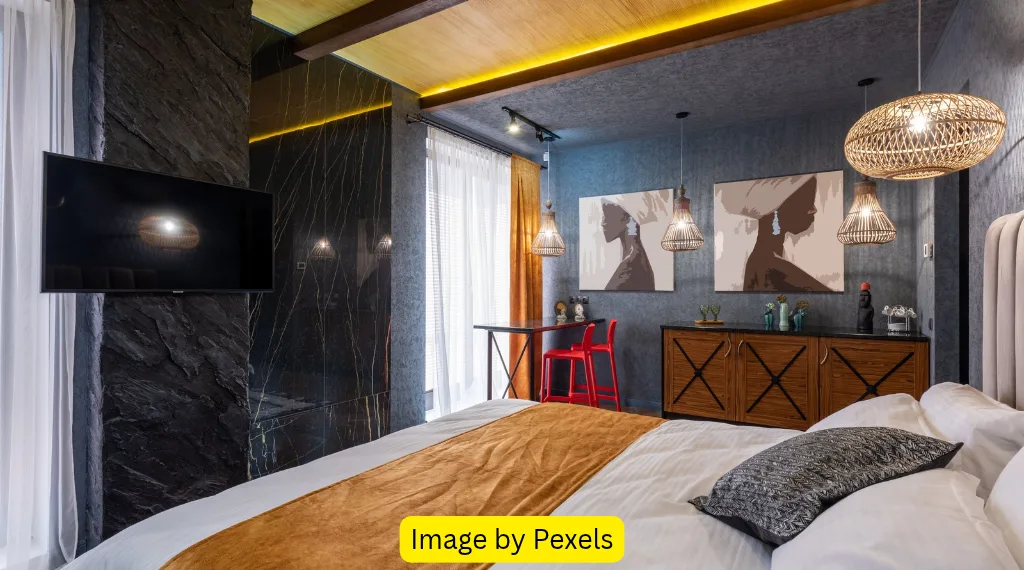
A dark ceiling can create an intimate and sophisticated atmosphere. Shades such as charcoal, deep navy, forest green, and warm brown can make a bedroom feel more enclosed in a comfortable way.
This approach is especially effective in larger bedrooms or spaces with good natural light. It also works beautifully when the walls and bedding are lighter, creating contrast without making the entire room feel dark.
For a coordinated appearance, repeat the ceiling color in smaller details such as cushions, artwork, or decorative accessories.
Try this look: Pair a deep navy ceiling with warm white walls, natural wood furniture, and soft neutral bedding.
9. Add Elegance with Decorative Ceiling Molding
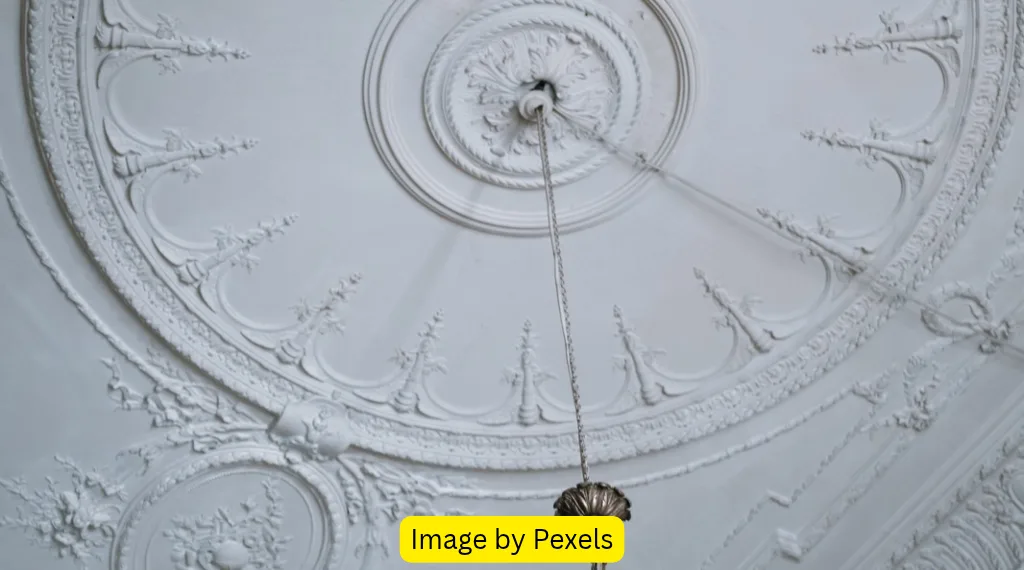
Ceiling molding adds architectural detail without necessarily changing the entire ceiling structure. It can frame the perimeter of the room, create decorative borders, or complement existing wall paneling.
Traditional bedrooms often use detailed molding with classic furniture and elegant finishes. For modern interiors, simple linear profiles can provide definition without looking overly ornate.
You can keep the molding the same color as the ceiling for a subtle effect or paint it in a contrasting shade to make the detail more noticeable.
Design tip: Match the scale of the molding to the room. Oversized decorative profiles may overpower a small bedroom, while very narrow molding can disappear in a large space.
10. Highlight the Bed with a Central Ceiling Panel
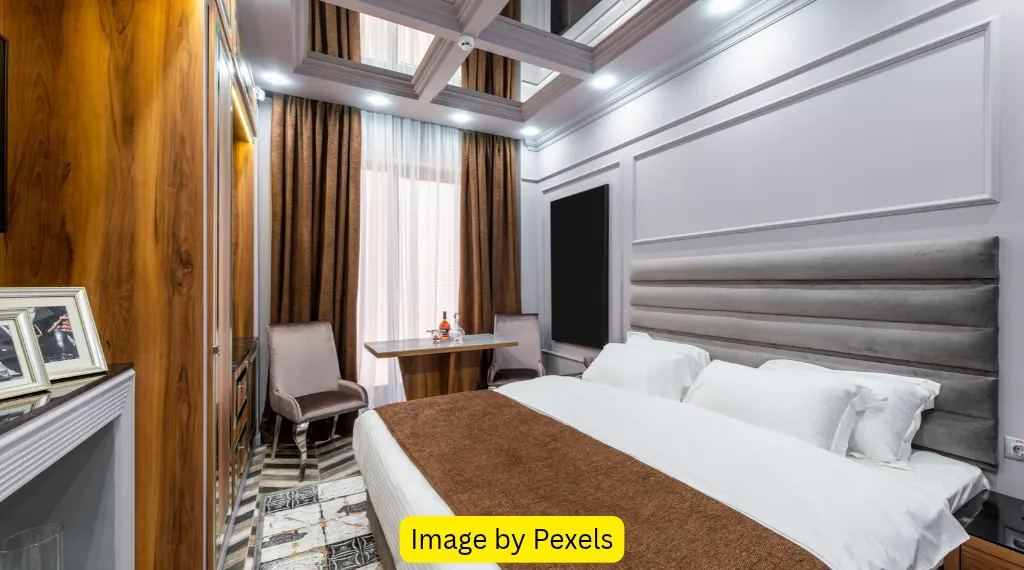
A central ceiling panel creates a decorative focal point above the bed. It can be made using wood, decorative molding, textured finishes, or carefully arranged geometric sections.
This is a useful option when you want the ceiling to feel special without covering the entire surface in elaborate details.
For a balanced result, position the panel in line with the bed and consider how it relates to the headboard, bedside tables, and other furniture.
Styling idea: Use a rectangular wood panel above the bed and repeat the same wood tone in the nightstands or headboard.
11. Embrace a Sloped Ceiling in an Attic Bedroom
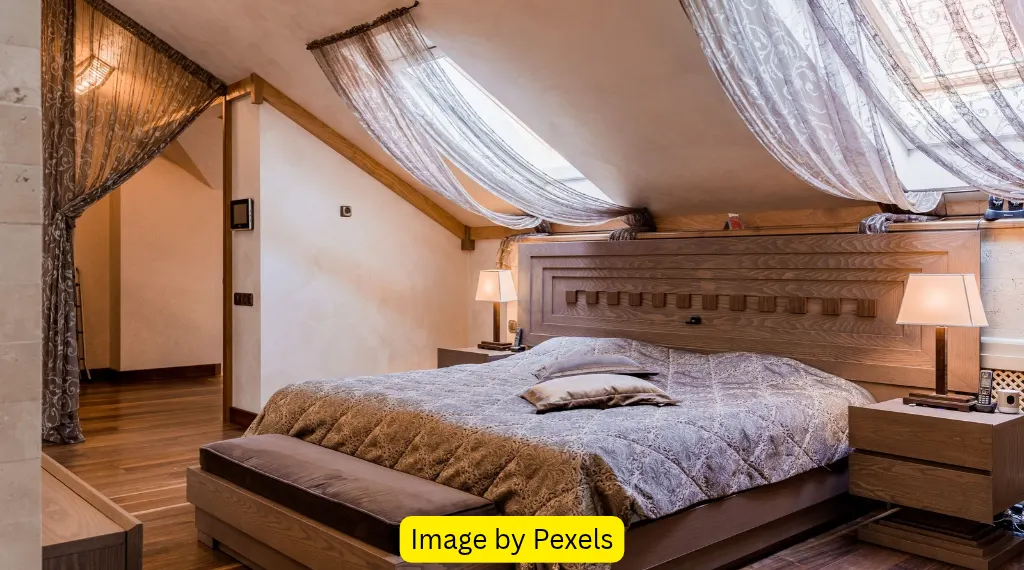
A sloped ceiling can become one of the most attractive features of an attic or upper-floor bedroom. Rather than trying to hide the angled surface, use it as part of the room’s design.
Painted white slopes create a bright and open appearance. Wooden finishes introduce warmth, while a darker color can make the room feel cozy and intimate.
If the roof structure allows it, exposed beams can add further character. You can also use the sloped surface to create a visual boundary around the sleeping area.
Practical tip: Before adding decorative materials, check insulation, ventilation, and moisture protection. These details are particularly important in rooms directly beneath the roof.
12. Give the Bedroom Height with a Vaulted Ceiling
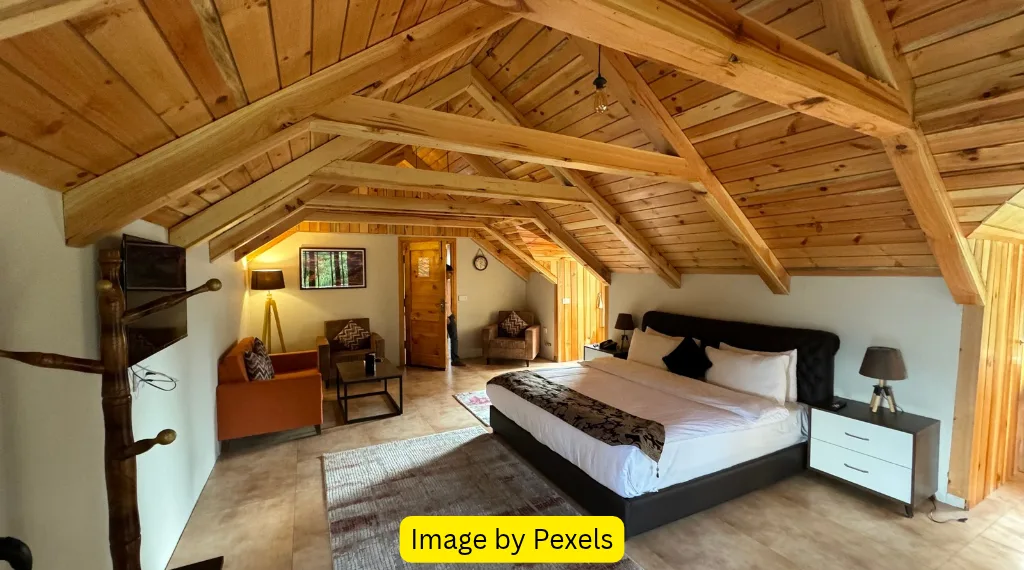
A vaulted ceiling follows an angled roof structure and creates a greater sense of vertical space. It can make a bedroom feel open, spacious, and architecturally distinctive.
Vaulted ceilings are especially attractive in large master bedrooms, cottages, and homes with pitched roofs. Natural timber beams can emphasize the shape, while a simple painted finish keeps the design clean.
Because the ceiling becomes a major visual feature, avoid overcrowding the room with too many competing decorative elements.
Design tip: Let the ceiling shape remain visible. Choose furniture and wall decor that complement its height rather than distracting from it.
13. Use Ceiling Wallpaper to Introduce Pattern
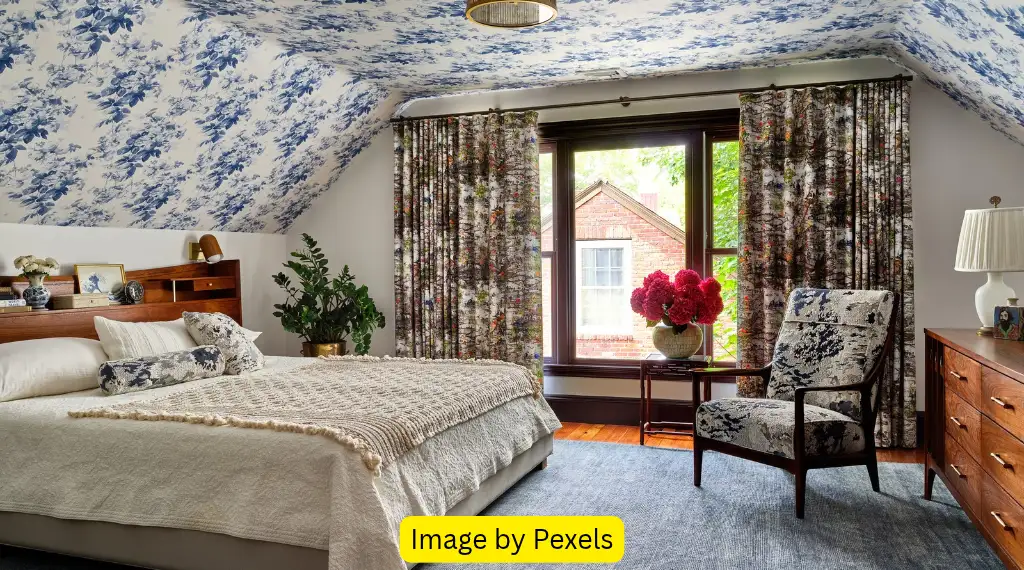
Wallpaper is not limited to bedroom walls. Applying it to the ceiling can introduce color, pattern, and texture in an unexpected way.
Floral prints work well in romantic or traditional bedrooms, while subtle geometric patterns suit contemporary spaces. Textured and grasscloth-style designs can also add interest without relying on bold colors.
A wallpapered ceiling is particularly effective when the walls are relatively simple. It creates a focal point while allowing the rest of the room to remain calm.
Before installation, make sure the wallpaper is suitable for ceiling application and that the surface is properly prepared.
Try this look: Choose a delicate botanical print above a neutral bed, then keep the walls and larger furniture pieces understated.
14. Introduce a Soft Curved Ceiling Design
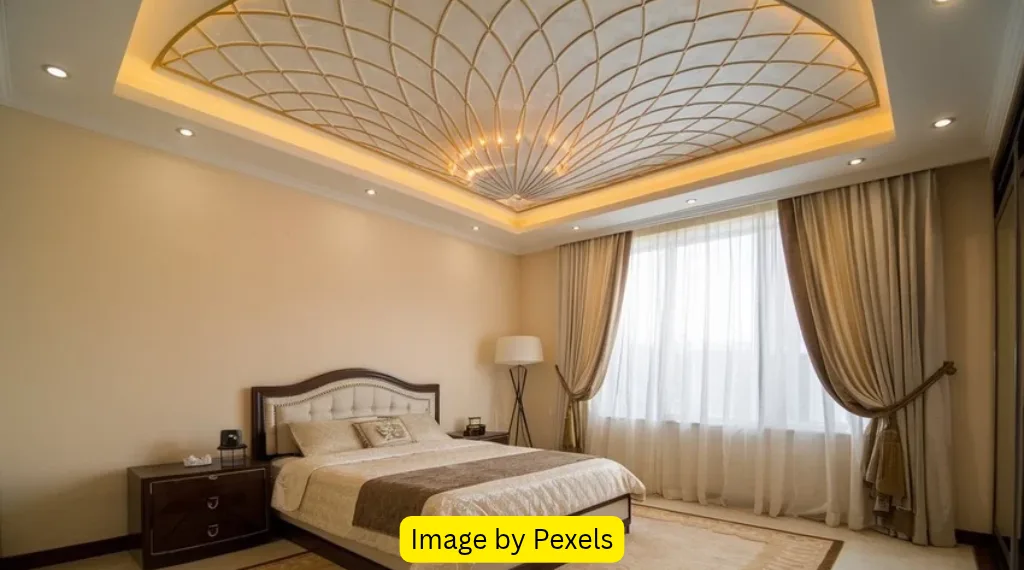
Curved ceiling details bring a softer appearance to a bedroom dominated by straight lines. Rounded corners, arched transitions, and flowing ceiling sections can create a more fluid architectural look.
This style is especially suitable for contemporary interiors that combine curved furniture, rounded mirrors, and soft decorative shapes.
You can use a curved detail to frame the bed area or create a transition between different ceiling levels.
Design tip: Keep the curve simple and proportionate. A gentle architectural shape often looks more sophisticated than an overly complicated design.
15. Create a Textured Ceiling for Added Character

A textured ceiling can add subtle depth to a bedroom without requiring a dramatic architectural structure. Options include decorative plaster finishes, subtle surface patterns, and carefully applied textured coatings.
A smooth, softly textured finish can complement minimalist interiors, while a more pronounced handcrafted effect may suit rustic or Mediterranean-inspired bedrooms.
The texture should work with the rest of the room rather than compete with patterned bedding or heavily decorated walls.
Practical tip: Review a sample under the bedroom’s actual lighting conditions before committing to a finish. Texture can look very different in daylight compared with evening illumination.
16. Choose an Exposed Concrete Ceiling for an Industrial Look
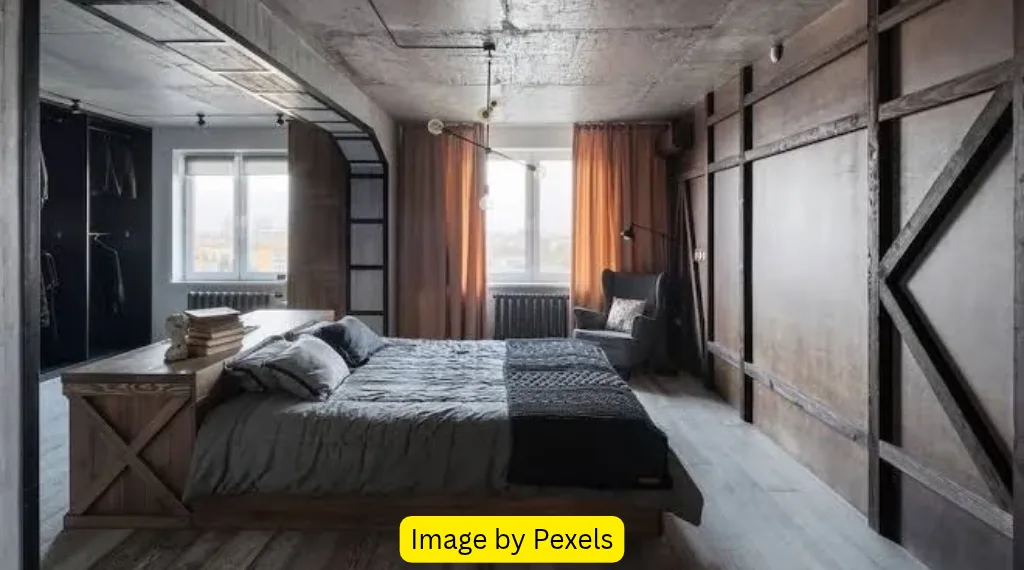
An exposed concrete ceiling offers a distinctive industrial appearance. Its natural gray tones, subtle variations, and understated surface texture can bring character to a modern bedroom.
It works particularly well with black metal details, simple furniture, warm wood, and soft fabrics that balance the harder surface.
If the original concrete is not suitable for exposure, decorative concrete-effect finishes may provide a similar aesthetic.
Styling idea: Soften the industrial look with a padded headboard, warm bedding, natural rugs, and wooden bedside furniture.
17. Add Metallic Details for a Refined Finish
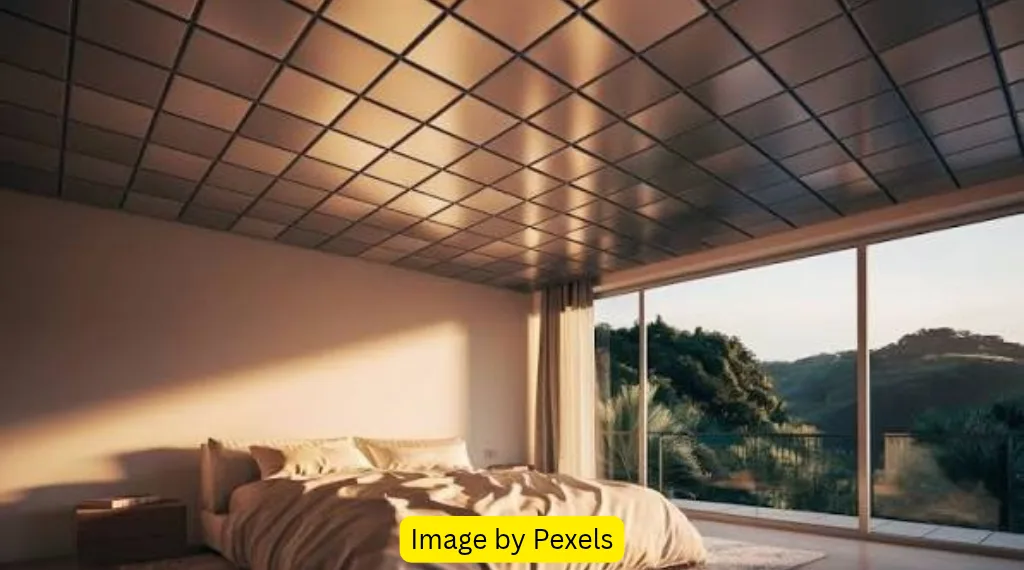
Metallic ceiling accents can introduce a touch of glamour without making the entire ceiling shiny or overwhelming.
Consider subtle gold, bronze, champagne, or silver details along decorative borders, panel edges, or selected ceiling features. These finishes can complement metal furniture hardware, mirror frames, and other bedroom accessories.
The most successful approach is usually restraint. A small amount of metallic detail can look more sophisticated than covering large ceiling areas in reflective finishes.
Try this look: Pair champagne-colored accents with warm beige walls and cream bedding for a soft, elegant bedroom.
18. Use Decorative Ceiling Medallions
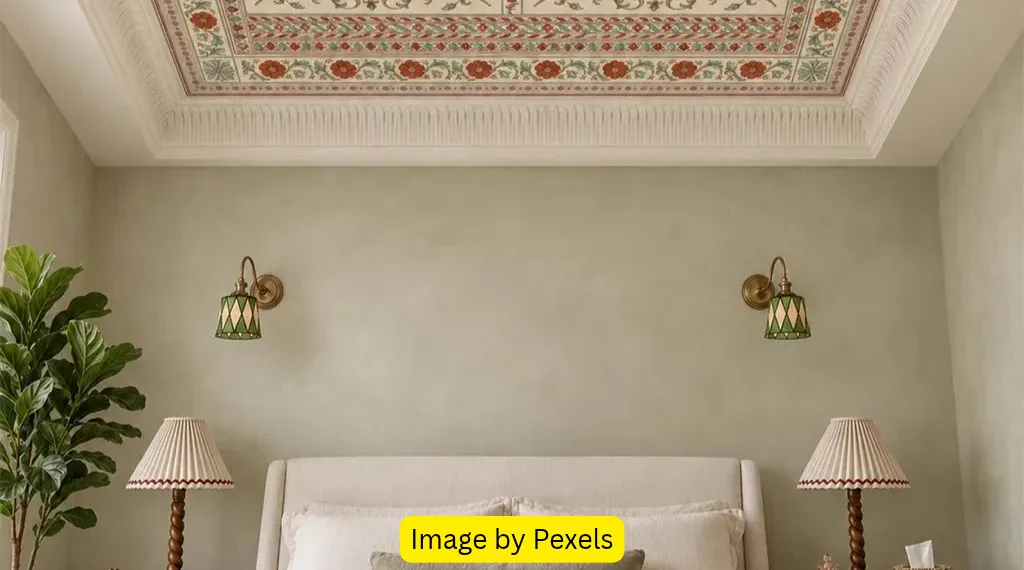
A ceiling medallion is a decorative feature installed around a central ceiling fixture. It can add detail to an otherwise plain ceiling and help establish a traditional or classic interior style.
Ornate medallions suit bedrooms with decorative molding, vintage furniture, and traditional finishes. Simpler designs can also work in transitional interiors.
The medallion should be proportionate to the ceiling and the fixture beneath it. An oversized piece may dominate the room, while a very small one may not have much visual impact.
Design tip: Paint the medallion the same color as the ceiling for a subtle architectural effect.
19. Create a Contemporary Look with a Floating Ceiling Detail
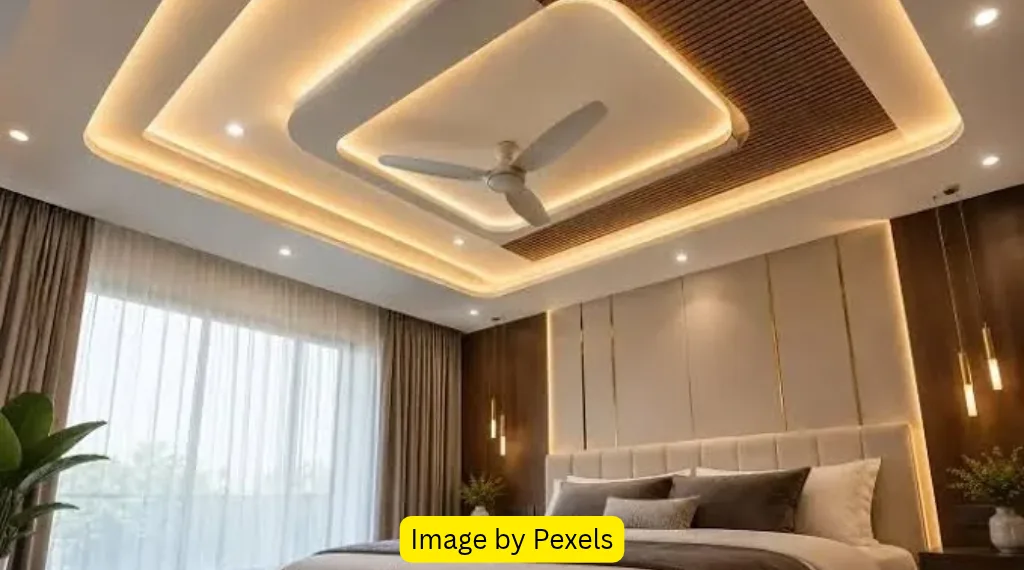
A floating ceiling design uses a recessed perimeter or a visually separated central section to create the impression that part of the ceiling is suspended.
The effect can be achieved through carefully planned construction and concealed detailing. It is often used in contemporary bedrooms where clean architectural lines are preferred.
A floating detail can define the bed area, introduce depth, or make a large ceiling feel more structured.
If you want to add indirect lighting, plan the concealed channels and electrical access as part of the design rather than treating them as an afterthought.
Best for: Modern bedrooms, larger master suites, and interiors with simple architectural finishes.
20. Combine Ceiling Materials for a Custom Bedroom Design
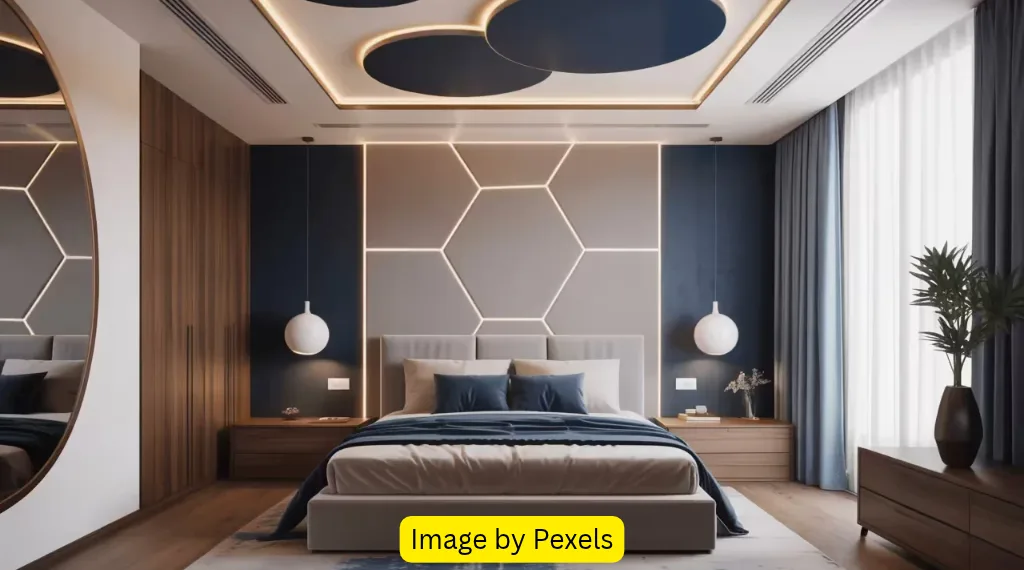
Combining two or more ceiling materials can create a distinctive look that feels tailored to the room. You might pair painted gypsum sections with wood panels, add a textured central feature to a smooth ceiling, or combine decorative molding with a contrasting finish.
The key is choosing materials that work together in color, texture, and scale.
For example, natural oak can soften a white architectural ceiling, while a darker central panel can add contrast to a neutral room.
Design tip: Limit the combination to a few complementary finishes. Too many different materials can make the ceiling feel visually fragmented.
How to Choose the Right Bedroom Ceiling Design
A beautiful ceiling design should suit the room’s proportions and the way the space is used. Before selecting a style, consider these important factors.
Consider Your Bedroom’s Ceiling Height
Ceiling height is one of the most important factors when choosing a design.
For lower ceilings, simple finishes, subtle molding, and clean paint colors can help maintain an open feeling. Complex layered structures may reduce the available height and make the room feel smaller.
Higher ceilings provide more flexibility. You can consider coffered panels, exposed beams, decorative molding, or a vaulted design if the architecture allows it.
Always consider the finished ceiling height after any construction work.
Choose a Design That Fits the Room Size
The size of the bedroom affects how much visual detail the ceiling can comfortably carry.
In a small bedroom, a plain white finish, narrow decorative border, or simple central panel may be enough. In a spacious master bedroom, larger architectural features can help the ceiling feel proportionate to the rest of the room.
Think about the bed’s position, wardrobe placement, and the overall furniture arrangement before finalizing the design.
Match the Ceiling to Your Interior Style
A ceiling should feel connected to the rest of the bedroom.
- Modern bedrooms: Consider geometric details, clean false ceilings, smooth finishes, and simple colors.
- Traditional bedrooms: Decorative molding, coffered panels, and ceiling medallions can complement classic furniture.
- Farmhouse bedrooms: Wooden beams, natural planks, and warm neutral finishes create a relaxed look.
- Minimalist bedrooms: Simple white surfaces and restrained architectural details keep the room uncluttered.
- Industrial bedrooms: Exposed concrete and simple structural details create a distinctive appearance.
- Organic bedrooms: Natural wood, soft textures, and muted finishes help create a calm atmosphere.
Select Materials Carefully
Ceiling materials affect appearance, maintenance, installation, and cost.
Gypsum-based systems can provide flexibility for shaped and layered designs. Wood adds natural warmth but may require appropriate treatment and maintenance. Decorative plaster can create detailed finishes, while wallpaper offers a way to introduce patterns without major structural changes.
Consider the room’s moisture conditions, building structure, product specifications, and local installation requirements before choosing materials.
Plan the Lighting Alongside the Ceiling
Lighting should be considered early in the design process, especially if the ceiling includes recessed sections, concealed channels, or decorative panels.
Think about how the ceiling will work with the room’s general lighting and bedside fixtures. Avoid creating a design that looks impressive but leaves important areas poorly illuminated.
For more ideas about choosing fixtures and planning bedroom illumination, see our guide to bedroom lighting ideas.
Set a Realistic Budget
Some ceiling updates involve little more than painting or adding decorative trim. Others require framing, electrical work, specialist materials, and professional installation.
Before choosing a design, ask for a clear estimate that includes preparation, materials, labor, finishing, and any necessary electrical work.
A simple, well-executed ceiling can look more elegant than an elaborate design made with unsuitable materials or poor workmanship.
Bedroom Ceiling Designs for Different Spaces
Small Bedroom Ceiling Ideas
A small bedroom benefits from ceiling designs that preserve a sense of openness. Simple finishes are often more effective than complicated architectural structures.
Consider:
- A clean white or warm-white ceiling.
- A narrow decorative molding border.
- Subtle geometric detailing.
- A simple tray-style feature, if ceiling height allows.
- Light-colored wood accents used sparingly.
The goal is to create visual interest without making the ceiling feel heavy.
Large Master Bedroom Ceiling Ideas
A spacious master bedroom can accommodate more substantial architectural features.
Consider:
- Coffered ceiling panels.
- Exposed wooden beams.
- A vaulted or sloped ceiling.
- A large central decorative panel.
- Layered ceiling structures.
- A combination of complementary materials.
Choose a design that relates to the size of the bed and the room’s overall layout.
Low Ceiling Bedroom Ideas
Low ceilings require careful planning because bulky structures can make the room feel compressed.
Simple painted finishes, restrained molding, and minimal decorative details are often suitable. If you want architectural interest, use shallow profiles and avoid unnecessary layers.
Before installing any suspended ceiling system, check the final clearance and how it will affect the room’s proportions.
Modern Bedroom Ceiling Ideas
Modern interiors usually benefit from clean shapes, thoughtful proportions, and a limited material palette.
Geometric panels, smooth gypsum finishes, curved details, and carefully selected wood accents can all work well.
Rather than combining every modern feature, choose one main design element and allow it to stand out.
Common Bedroom Ceiling Design Mistakes to Avoid
A ceiling can become a beautiful feature, but poor planning may make it feel out of place or create unnecessary maintenance problems.
- Ignoring ceiling height: A deep false ceiling may not be suitable for a room with limited vertical space.
- Using too many patterns: Combining geometric panels, decorative molding, and busy wallpaper can create visual clutter.
- Choosing materials without considering maintenance: Wood, textured finishes, and decorative surfaces may have different cleaning and care requirements.
- Forgetting the room’s proportions: A small decorative feature may disappear in a large room, while an oversized design can overwhelm a compact bedroom.
- Planning lighting too late: Concealed lighting channels and recessed fixtures may require construction changes if they are not considered early.
- Overlooking moisture and ventilation: Ceiling finishes must be appropriate for the building conditions, especially in spaces beneath roofs.
- Selecting a style that clashes with the interior: A highly ornate ceiling may feel disconnected from a minimalist bedroom.
Frequently Asked Questions About Bedroom Ceiling Design
Which ceiling design is best for a modern bedroom?
Modern bedrooms often look good with clean false ceilings, geometric panels, subtle tray designs, and smooth gypsum finishes. The best option depends on ceiling height, room size, and the overall interior style.
What is the best ceiling design for a small bedroom?
A simple white ceiling, narrow molding border, or restrained decorative detail can work well in a small bedroom. Avoid designs that reduce too much ceiling height or introduce excessive visual complexity.
Are false ceilings a good idea for bedrooms?
False ceilings can provide a clean finish and allow space for concealed services or planned lighting installations. However, they reduce the available ceiling height and add installation costs, so they should be chosen according to the room’s dimensions and requirements.
Which ceiling color makes a bedroom look bigger?
White and other light shades can help a bedroom feel more open by reflecting available light. A similar light tone on the walls and ceiling can also create a more continuous appearance.
Are wooden ceilings suitable for bedrooms?
Yes. Wooden ceilings can add warmth and texture to many bedroom styles, including farmhouse, rustic, Scandinavian, and contemporary interiors. Choose materials and finishes suitable for the room’s conditions and maintenance needs.
How can I make a bedroom ceiling look luxurious without spending too much?
A fresh paint finish, simple decorative molding, a carefully selected ceiling medallion, or a small central feature can create an elegant appearance without requiring a complex ceiling installation.
Is a coffered ceiling suitable for a small bedroom?
It can be, but the design should be scaled carefully. Large, simple panels may work better than an intricate pattern of many small sections. Ceiling height should also be considered before installation.
Read our related guide Bedroom Lighting Ideas.
Final Thoughts
The ceiling is an opportunity to give your bedroom more character, balance, and architectural interest. Whether you prefer the natural warmth of wooden planks, the timeless detail of coffered panels, or the simplicity of a clean white finish, the right design can make the entire space feel more complete.
Start with the room’s dimensions and ceiling height, then choose materials and details that complement your furniture and interior style. You do not need an elaborate construction project to create a beautiful result. Sometimes one carefully chosen feature is all it takes to make an ordinary bedroom feel special.

