
A TV stand does more than support your television. It can organize gaming equipment, hide cables, provide storage, and help define the look of your living room. The right design can make an entertainment area feel organized and comfortable, while the wrong one may leave the television poorly positioned or create unnecessary clutter.
Today’s TV stands come in many forms, from simple open-shelf units and compact corner cabinets to floating consoles and full entertainment centers. Some prioritize storage, others save floor space, and some are designed primarily to complement a particular decorating style.
Before choosing one, consider your television’s dimensions and weight, the room’s layout, the equipment you plan to store, and the overall appearance you want to achieve.
This guide explores 15 types of TV stands, explains what makes each one different, and offers practical advice for choosing a unit that works with your home.
Modern TV Stands for Contemporary Living Rooms
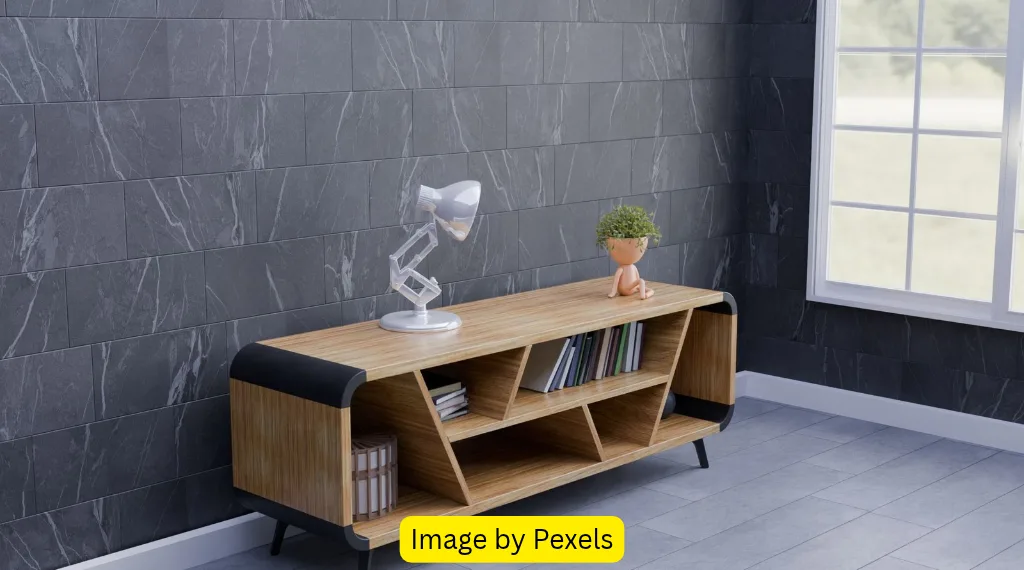
Modern TV stands are designed around clean lines, practical storage, and a streamlined appearance. They often combine simple geometric shapes with finishes such as natural wood, matte black, white, glass, or metal.
Many contemporary designs include a mixture of open compartments and closed cabinets. Open sections provide convenient access to media players and gaming equipment, while doors help keep remotes, cables, and miscellaneous accessories out of sight.
A modern TV stand can work in a variety of interiors because it does not depend on elaborate decorative details. For a coordinated appearance, choose a finish that relates to nearby furniture, flooring, or lighting.
Best for: Contemporary living rooms, apartments, and homes with simple, uncluttered interiors.
What to consider: Check the depth of the compartments before buying. Some slim modern designs may not provide enough room for larger gaming consoles, receivers, or sound equipment.
Wooden TV Stands for Natural Warmth
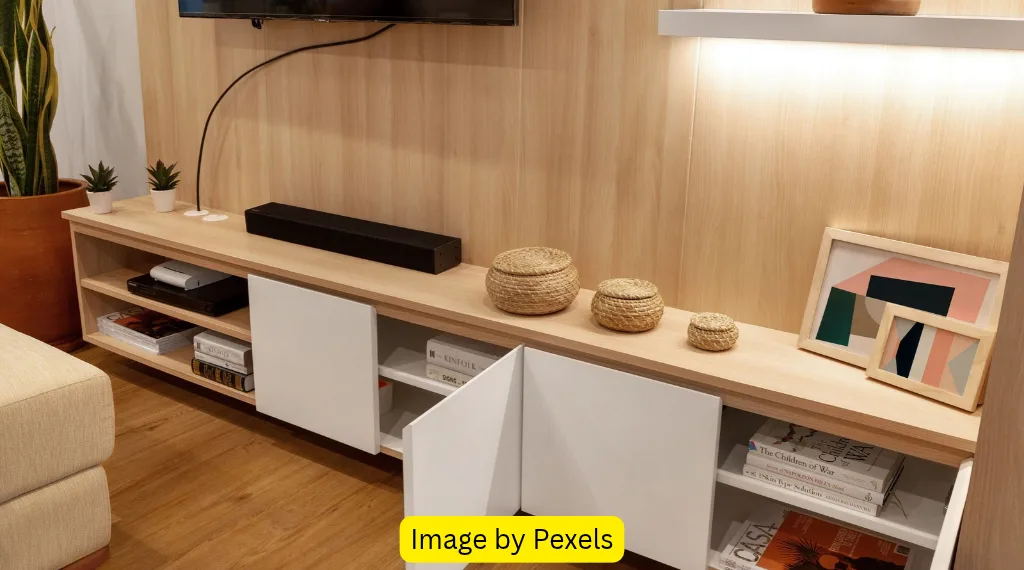
Wooden TV stands remain popular because they bring natural texture and warmth into an entertainment area. They are available in solid wood, engineered wood, veneer, and combinations of wood with metal or glass.
The appearance depends heavily on the wood species, grain, color, and finish. Light oak and ash can create a relaxed, airy atmosphere, while walnut and darker finishes introduce more visual depth. Painted wooden cabinets offer another option when you want the traditional feel of wood with a more contemporary color.
Wooden units are available with drawers, sliding doors, open shelves, and combinations of storage compartments. This makes them suitable for households with different storage needs.
Best for: Traditional, Scandinavian, rustic, transitional, and contemporary living rooms.
What to consider: Compare the construction materials rather than judging a stand by its appearance alone. Solid wood, veneer, and particleboard have different characteristics, maintenance needs, and price points. Check the stated weight capacity and care instructions.
Floating TV Stands for a Space-Saving Look
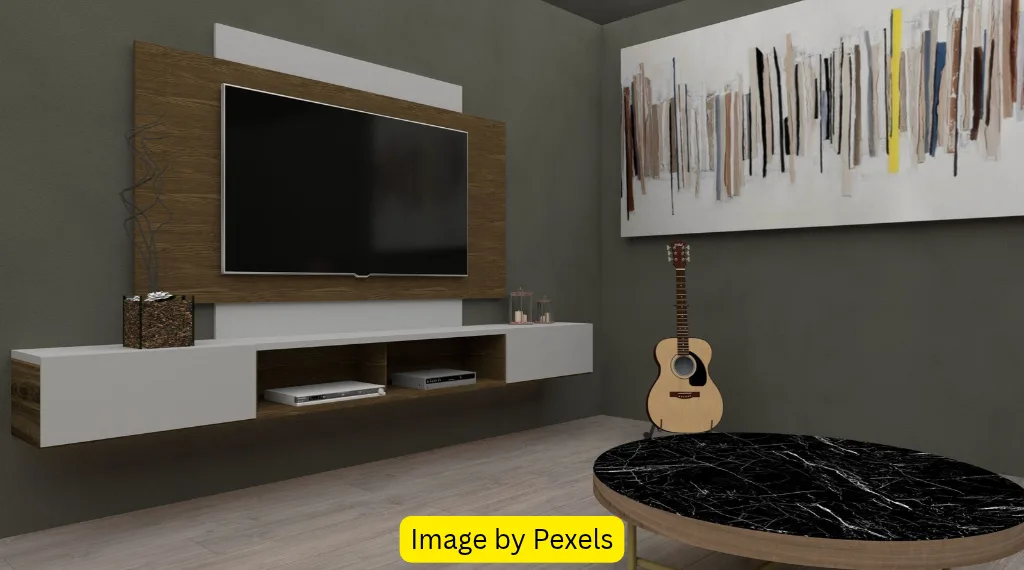
A floating TV stand is attached directly to the wall instead of resting on legs or a base. Because the floor beneath it remains open, the room can feel less crowded, and cleaning around the entertainment area becomes easier.
Floating consoles are especially useful in compact living rooms where floor space is limited. Many designs include concealed cabinets, open compartments, and openings for cable routing. Some are long and low, creating a continuous horizontal feature beneath a wall-mounted television.
Installation requires more planning than a freestanding unit. The wall must be suitable for the mounting system, and the brackets and anchors must support the combined load of the stand and its contents. A floating cabinet should never be installed using unsuitable fixings simply because they fit the mounting holes.
Best for: Modern apartments, minimalist interiors, and rooms where keeping the floor visually open is important.
What to consider: Check the wall construction, mounting instructions, and maximum load. Plan cable routes and electrical access before installation.
Corner TV Stands for Unused Spaces
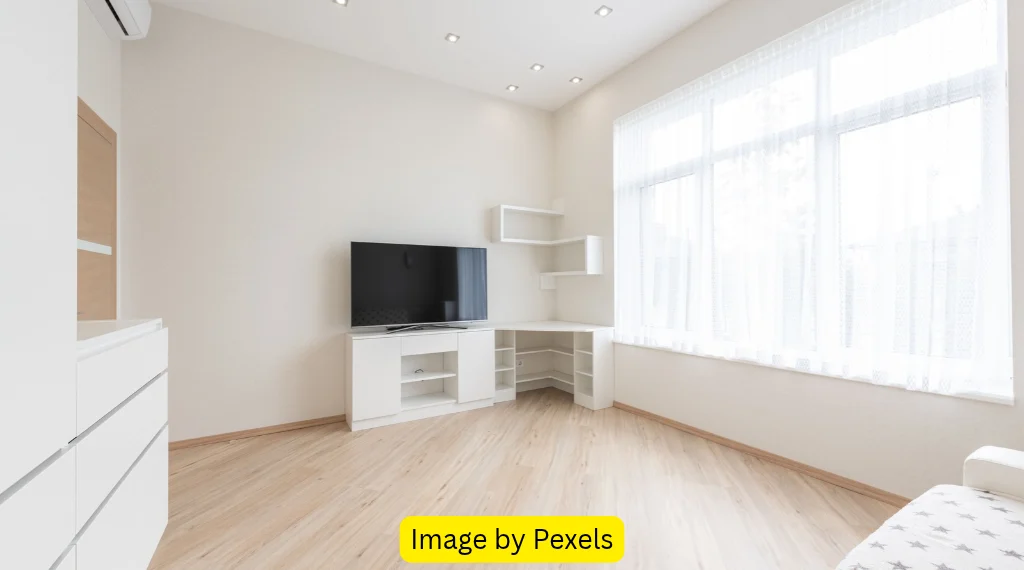
A corner TV stand is designed to fit into the corner of a room, making use of an area that might otherwise remain empty. Its angled or triangular shape can help organize a television in smaller living rooms, bedrooms, and apartments.
Corner models vary in design. Some have a simple top surface and one or two shelves, while others include cabinets, drawers, and decorative doors. Their compact footprint can be useful when the main walls are already occupied by windows, doors, or larger furniture.
However, a corner unit is not automatically suitable for every television. The screen needs enough support, and the viewing angle should be comfortable from the main seating position. Measure the available corner space and the stand’s actual dimensions rather than relying only on its product photograph.
Best for: Small living rooms, bedrooms, studio apartments, and layouts with limited uninterrupted wall space.
What to consider: Check the usable top width, screen support, viewing angle, and access to power outlets.
TV Stands with Storage for Organized Entertainment Areas

A TV stand with storage is a practical choice for households that need more than a surface for the television. Depending on the design, it may include drawers, cabinets, open shelves, or a combination of all three.
Closed storage is useful for items you do not need to access frequently, such as spare cables, game controllers, manuals, and miscellaneous accessories. Open shelves are more convenient for equipment that needs regular access or remote-control visibility.
The best storage arrangement depends on what you own. A household with gaming equipment may need larger open compartments, while someone who prefers a tidy living room may want more concealed cabinet space.
Best for: Family living rooms, busy households, and entertainment areas with several accessories.
What to consider: Check the dimensions of each compartment. Make sure electronic equipment has the ventilation and clearance recommended by its manufacturer.
Entertainment Centers for Large Living Rooms
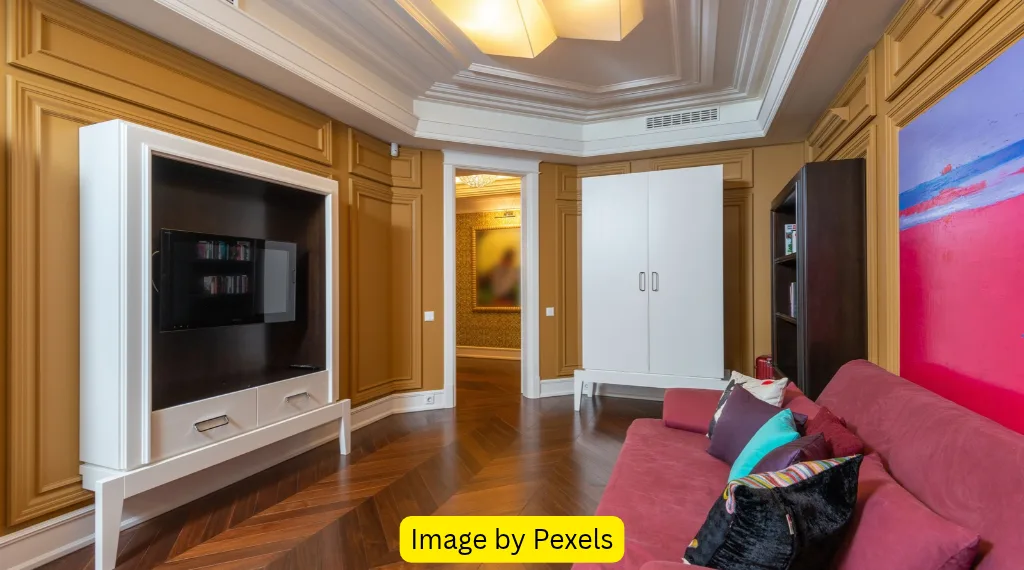
An entertainment center is a larger furniture arrangement that combines a television area with additional shelving, cabinets, and display space. Unlike a basic TV console, it can occupy a substantial portion of a wall.
Some entertainment centers feature tall side cabinets and open shelving, while others include a central console with matching bookcases or display units. This makes them useful for households that want to organize media equipment, books, photographs, and decorative accessories in one coordinated arrangement.
Because these units can dominate a room, their scale deserves careful attention. A large entertainment center may suit a spacious family room but feel overwhelming in a compact apartment.
Best for: Large living rooms, dedicated media spaces, and households that need substantial storage.
What to consider: Measure the full wall, including ceiling height, windows, doors, outlets, and nearby furniture. Confirm that the unit can be delivered through the home’s entrances and assembled in the intended location.
Farmhouse TV Stands for a Relaxed, Rustic Character
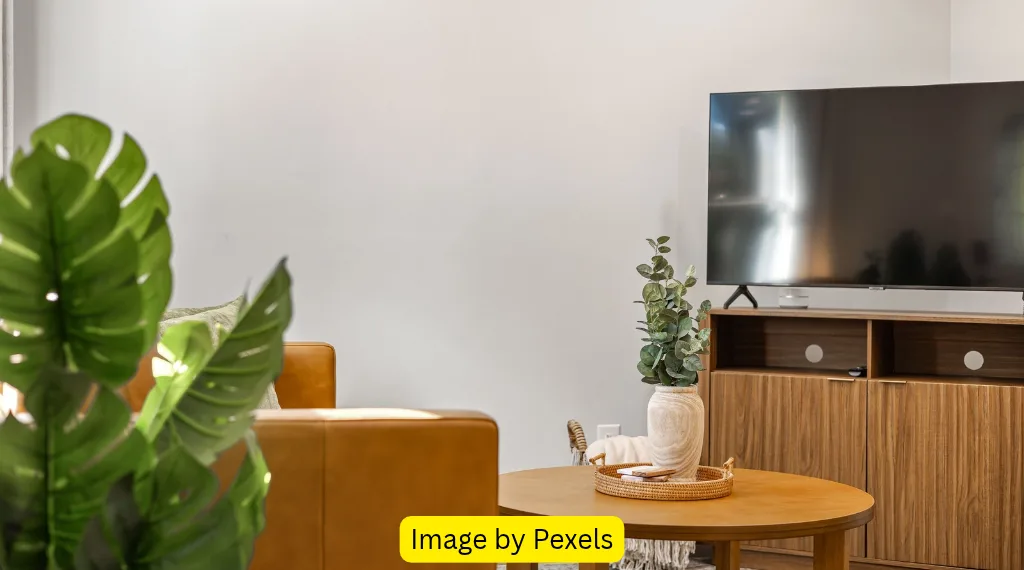
Farmhouse TV stands bring a relaxed, welcoming appearance to the living room. Common design details include natural or distressed wood finishes, simple panel doors, dark hardware, and sliding barn-style doors.
The style is not limited to traditional farmhouse interiors. A simpler farmhouse console can also work in transitional spaces when paired with neutral upholstery, natural fabrics, and understated accessories.
Many farmhouse units include enclosed cabinets that help hide entertainment accessories. Others combine open shelves with decorative doors to balance display space and concealed storage.
Best for: Farmhouse, country-inspired, rustic, and transitional living rooms.
What to consider: Look closely at the finish and construction. A distressed appearance is a design treatment, not proof that the furniture is made from solid or reclaimed wood.
Mid-Century Modern TV Stands for Timeless Style
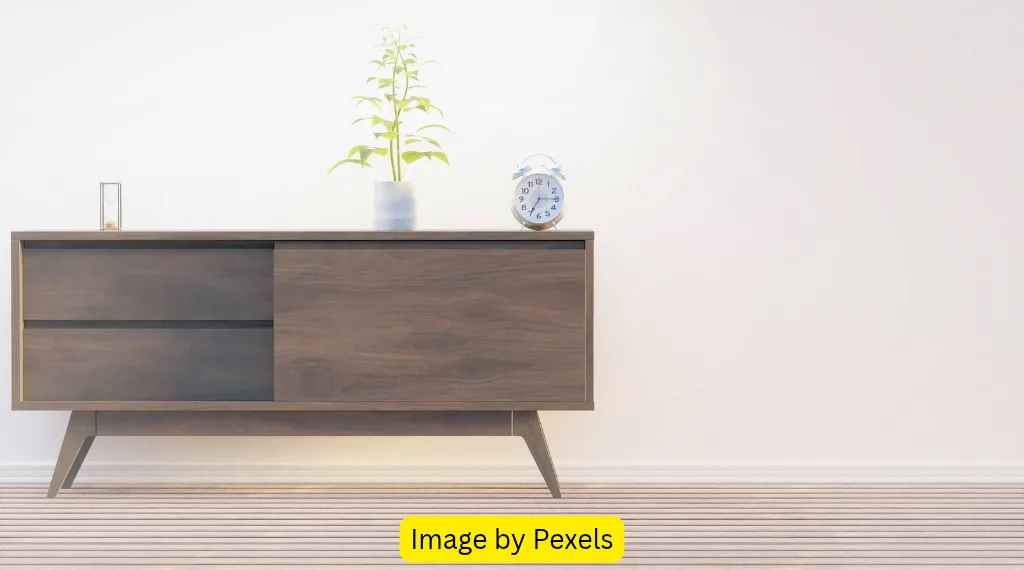
Mid-century modern TV stands are recognizable by their simple shapes, tapered legs, warm wood finishes, and restrained decorative details. Their elevated bases create an open appearance beneath the cabinet, making them a good option for rooms that need furniture with a lighter visual presence.
Storage varies by design. Some models have sliding doors and drawers, while others combine open compartments with small cabinets. Their relatively simple silhouettes can work well with both vintage-inspired and contemporary furniture.
To create a cohesive room, combine a mid-century console with other furniture that shares its clean lines or warm materials. You do not need every item to come from the same design period; a few repeated details are usually enough.
Best for: Mid-century interiors, retro-inspired rooms, and contemporary homes with warm wood accents.
What to consider: Check the height and stability of the legs, particularly if the television will sit directly on the stand. Confirm that the top surface is rated for your screen.
Minimalist TV Stands for a Clutter-Free Interior
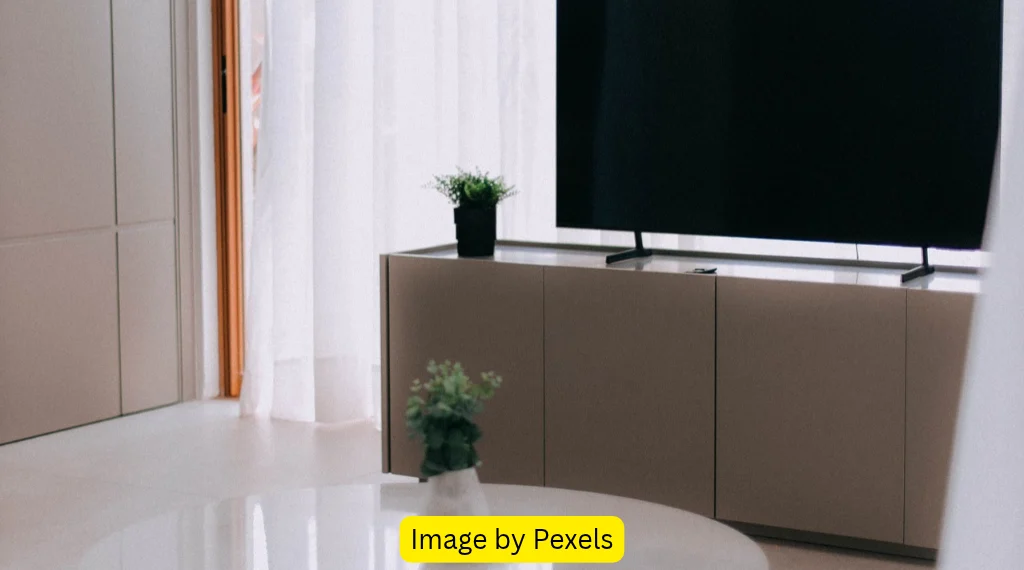
Minimalist TV stands emphasize simplicity, proportion, and practical function. They usually have smooth surfaces, limited ornamentation, and a restrained color palette.
White, black, gray, and natural wood finishes are common choices. Some models have handle-free cabinet fronts or push-to-open doors to maintain a continuous, uncluttered appearance.
Although minimalist furniture looks simple, it still needs to accommodate the equipment in your entertainment area. A cabinet with too little storage can quickly become surrounded by accessories and cables, undermining the clean look you wanted.
Best for: Minimalist, Scandinavian, and contemporary interiors.
What to consider: Choose a layout that hides unnecessary accessories while leaving enough accessible space for electronics that need ventilation or regular operation.
Glass TV Stands for a Light, Open Appearance
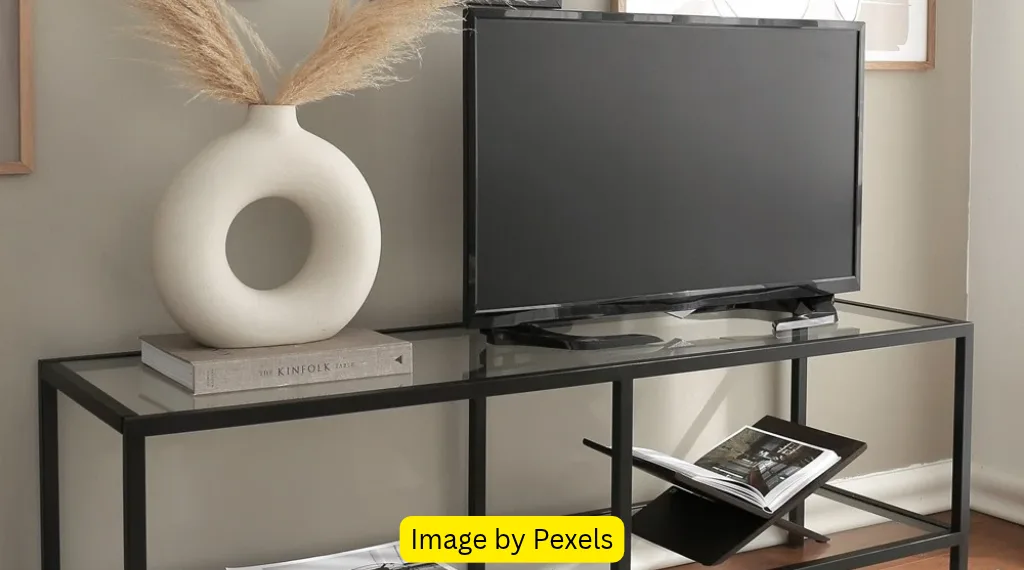
Glass TV stands offer a lighter visual alternative to large wooden cabinets. Their transparent surfaces allow more of the surrounding room to remain visible, which can make the furniture feel less visually heavy.
Many designs combine tempered glass with metal supports or shelves. They are often used in contemporary interiors where a simple, open appearance is preferred.
Glass furniture does require regular cleaning because fingerprints and dust can be noticeable. It may also be less suitable for households where the stand is likely to receive frequent impacts or rough handling.
Best for: Contemporary living rooms, compact entertainment areas, and interiors that use glass or metal accents.
What to consider: Check that the product uses appropriately rated safety glass and follow its weight limits. Inspect the edges, supports, and assembly instructions before use.
Fireplace TV Stands for a Combined Focal Point
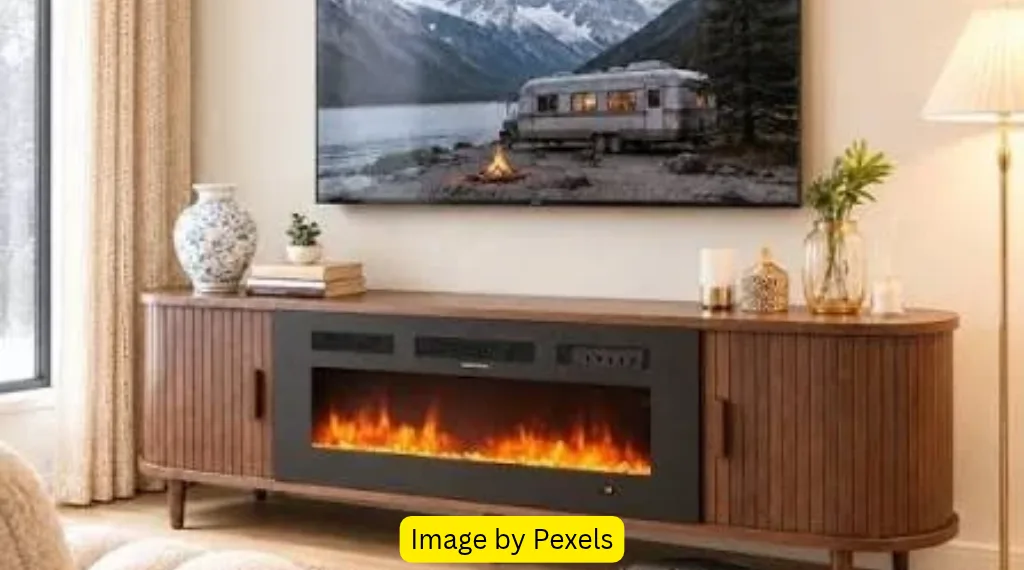
A fireplace TV stand combines a television console with an integrated electric fireplace feature. It can create a strong focal point in a living room while providing storage for media accessories.
The fireplace effect varies between models. Some offer decorative flames without heat, while others include a heating function with adjustable settings. This distinction matters because the unit’s operating requirements and heat output can affect where it should be positioned.
Follow the manufacturer’s instructions for clearance around the heater and television. Do not assume that every fireplace console is suitable for every screen or room arrangement.
Best for: Living rooms where homeowners want an integrated electric fireplace feature and television storage.
What to consider: Check the heater specifications, electrical requirements, ventilation, television clearance, and whether the fireplace function can operate independently of the heat.
Rolling TV Stands for Flexible Viewing
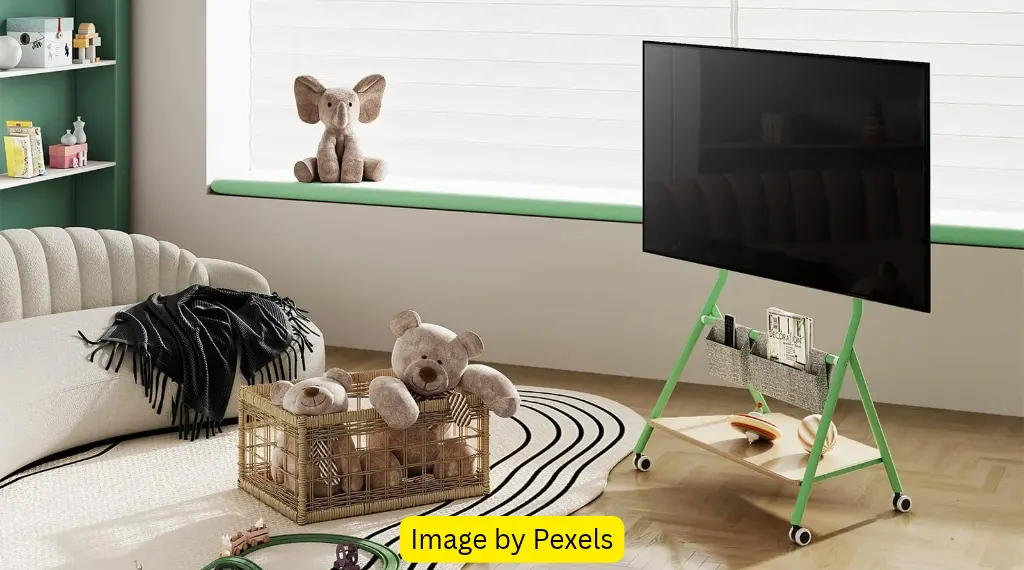
A rolling TV stand is designed to move between locations. It generally has a metal frame, a television mounting bracket, a base with caster wheels, and sometimes one or more shelves for accessories.
This design is useful when the television needs to be shared between rooms or repositioned for different activities. Mobile stands are also common in meeting rooms, classrooms, and other spaces where a fixed entertainment arrangement is not practical.
The wheels should be appropriate for the floor surface and should lock securely when the stand is in use. The television’s size and weight must also fall within the mounting system’s specifications.
Best for: Multi-purpose rooms, flexible home layouts, offices, and shared viewing spaces.
What to consider: Check the maximum screen size and weight, wheel-locking system, frame stability, cable length, and floor compatibility. Secure cables so they do not become trip hazards when the unit moves.
Adjustable-Height TV Stands for Flexible Positioning
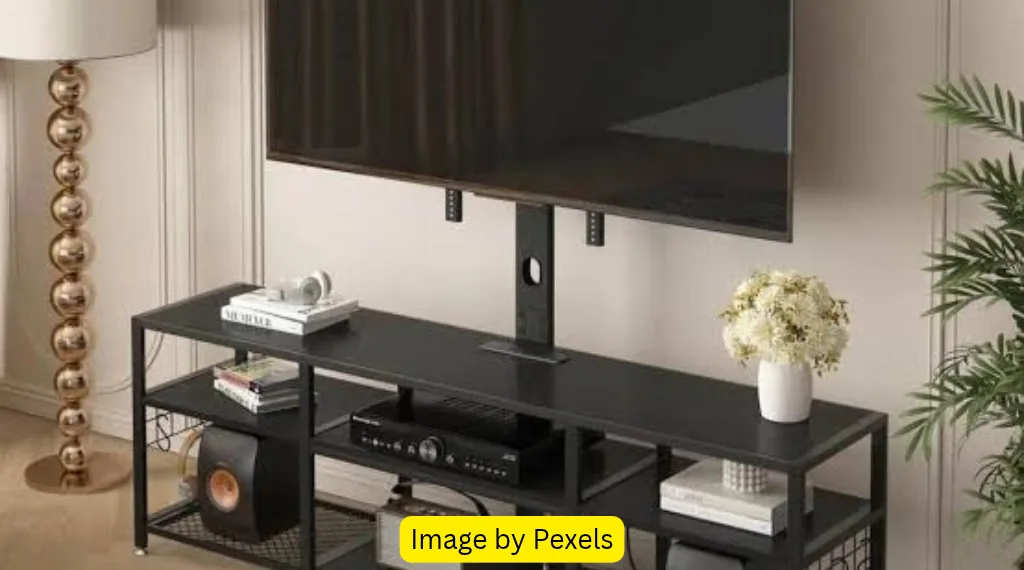
An adjustable-height TV stand allows the screen position to be changed to suit different seating arrangements or viewing needs. Some models use a manual adjustment mechanism, while others have motorized controls.
This flexibility can be useful in multi-purpose rooms where the same television is viewed from different positions. Certain designs are freestanding, while others use a mounting frame attached to a cabinet or wall.
Before choosing one, check the adjustment range and whether the stand can be locked securely at the desired height. The screen’s mounting pattern and weight must be compatible with the bracket.
Best for: Flexible living spaces, bedrooms, shared rooms, and settings where viewing positions change.
What to consider: Review the full adjustment range, mounting compatibility, stability, and installation requirements. Do not exceed the manufacturer’s screen weight or size limits.
Open-Shelf TV Stands for Easy Equipment Access
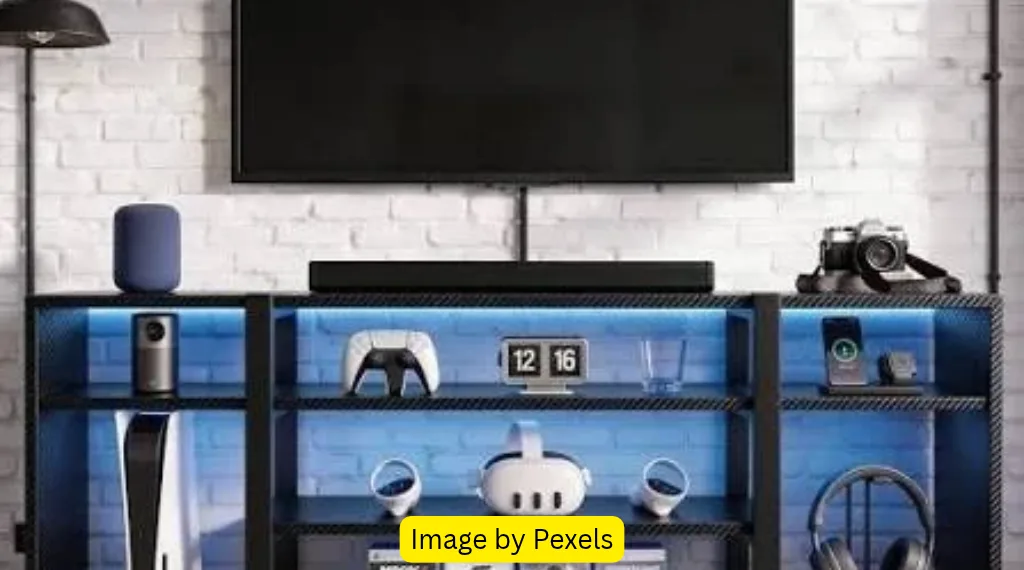
An open-shelf TV stand uses exposed compartments instead of relying mainly on closed cabinets. This makes it easy to reach media players, gaming consoles, speakers, and other equipment.
Open shelving can also help prevent equipment from being enclosed in a space with insufficient airflow. However, it does not automatically guarantee adequate ventilation. Electronic devices still need the clearances specified by their manufacturers.
The main trade-off is that cables and accessories remain visible. You can improve the appearance by grouping cables, using suitable cable-management accessories, and keeping the shelves organized.
Best for: Gaming setups, home entertainment systems, and households that frequently access their equipment.
What to consider: Measure your devices before buying and check shelf depth, height, and weight capacity. Keep equipment away from liquids and avoid stacking devices in ways that block ventilation.
Luxury Marble-Look TV Stands for an Elegant Finish
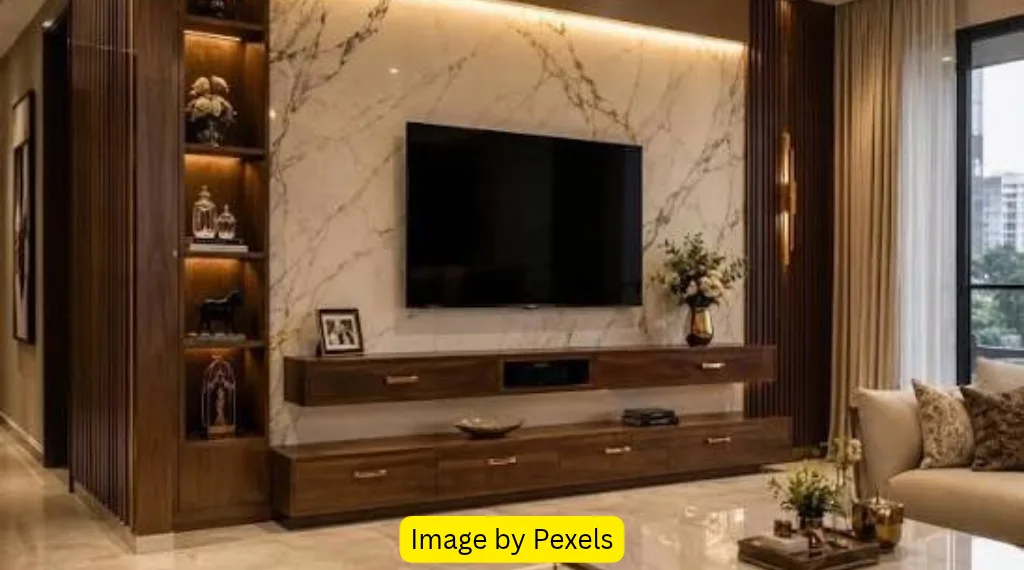
Marble TV stands introduce a decorative stone appearance that can make an entertainment area feel more refined. Some use natural marble, while others use engineered surfaces, ceramic finishes, or printed marble-look materials.
These products can have a substantial visual presence, particularly when combined with metal details, darker cabinetry, or decorative lighting. They are often designed with a combination of open shelves and concealed storage.
It is important to distinguish genuine marble from a marble-look finish. Natural stone has different weight, care, and maintenance requirements from engineered or printed alternatives. Product descriptions should identify the actual surface material.
Best for: Contemporary, glamorous, and upscale living rooms.
What to consider: Check the surface material, total weight, cleaning instructions, and structural support. If the stand has a stone top, confirm that the base is designed to support it safely.
How to Choose the Right TV Stand for Your Home
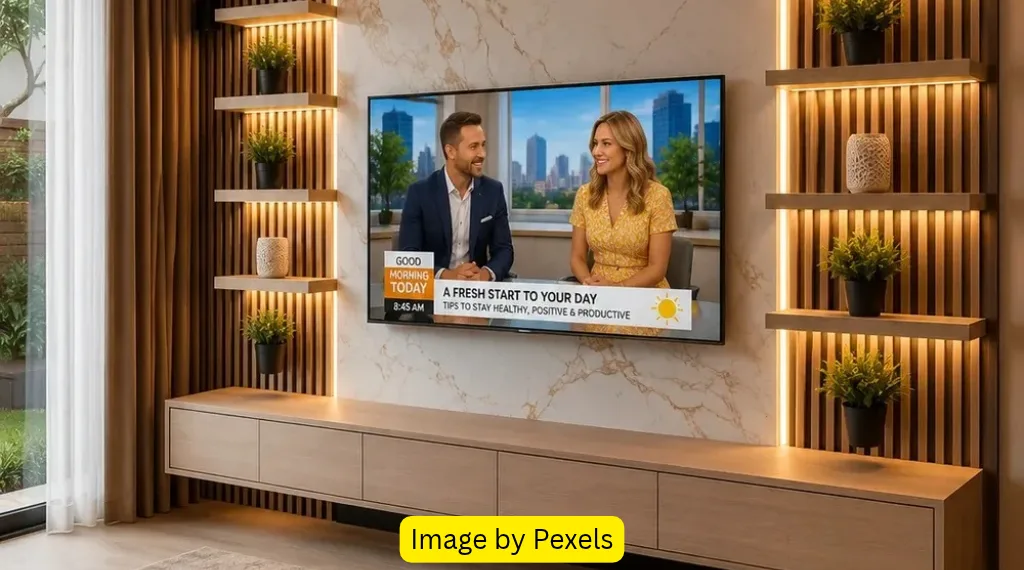
Choosing a TV stand becomes easier when you separate the decision into a few practical considerations. Appearance matters, but the stand also needs to support the television, accommodate your equipment, and fit the room.
Measure the television and the stand
Television sizes are usually advertised by diagonal screen measurement. That number does not tell you the full width of the television, so measure the actual screen and check the manufacturer’s dimensions, including its feet or base if it will sit on the console.
The stand’s usable top surface must safely support the television. A console that is wider than the screen often creates a balanced appearance, but the manufacturer’s support and weight requirements matter more than appearance alone.
Check the weight capacity
Every TV stand and mounting bracket has a stated weight limit. Compare that figure with the weight of your television and any equipment that will sit on the unit.
Do not assume a stand is suitable simply because the television fits on top. The load capacity, support points, and construction all need to be appropriate.
Choose the right height
The ideal television height depends on the seating arrangement and viewing position. Many living rooms are most comfortable when the screen is positioned around seated eye level, but the correct placement varies with the sofa, screen size, and room layout.
Before buying, consider the combined height of the stand and television. If the screen will be wall-mounted, think about the console’s height and the space between the two.
Decide how much storage you need
Make a list of the items that will live in the entertainment area. Include streaming devices, gaming consoles, receivers, controllers, remotes, speakers, and accessories.
Choose open shelves for equipment that needs regular access and suitable airflow. Closed cabinets are useful for items you want to keep out of sight. A combination of both is often practical.
Plan cable management
Loose cables can make even an attractive TV stand look untidy. Look for cable openings, rear access panels, or built-in routing channels.
Before purchasing, check where the electrical outlets are located. A stand with a cable opening may not help much if the opening does not align with the room’s connections.
Match the stand to the room
Think about the existing furniture, flooring, wall color, and overall decorating style. You can create a coordinated appearance by repeating one material or finish already present in the room.
A matching furniture set is not essential. A TV stand can also introduce contrast, provided its size, proportions, and finish work with the rest of the interior.
TV Stand Comparison: Which Type Should You Choose?
The following comparison summarizes the main differences between the designs discussed above.
| TV stand type | Main advantage | Possible drawback | Suitable setting |
|---|---|---|---|
| Modern | Clean, versatile appearance | Storage varies by model | Contemporary living room |
| Wooden | Warmth and material variety | Finish and construction affect maintenance | Traditional or modern home |
| Floating | Keeps floor space open | Requires suitable wall installation | Small or minimalist room |
| Corner | Uses an underutilized corner | May limit screen placement | Compact room |
| Storage | Organizes accessories | Can look bulky | Family living room |
| Entertainment center | Extensive storage and display space | Requires substantial wall area | Large living room |
| Farmhouse | Warm, relaxed character | Distressed finishes may not suit every interior | Farmhouse or transitional room |
| Mid-century modern | Timeless, elevated design | Some models offer limited storage | Retro-inspired or contemporary room |
| Minimalist | Simple, uncluttered appearance | May have fewer compartments | Minimalist interior |
| Glass | Light, open visual effect | Fingerprints and impact concerns | Contemporary room |
| Fireplace | Combines console and electric fireplace | Heat and clearance requirements | Living room |
| Rolling | Easy to reposition | Requires wheel locks and cable planning | Multi-purpose space |
| Adjustable-height | Flexible screen positioning | Adjustment range varies | Flexible viewing area |
| Open-shelf | Easy equipment access | Accessories and cables remain visible | Gaming or media setup |
| Marble-look | Decorative, refined finish | Actual surface materials vary | Elegant contemporary room |
TV Stand Safety and Installation Tips
[IMAGE PLACEHOLDER: Filename: tv-stand-safety-and-installation-tips.webp | 1024 × 570 WebP | Alt: Television secured on a stable TV console with organized cables and a properly anchored cabinet | Credit: Image by [verified creator/source name]]
A TV stand should be stable and appropriate for the equipment it supports. Good installation and sensible cable management help reduce avoidable risks, particularly in households with children or pets.
- Follow the weight limits: Check the maximum supported weight for the stand, shelf, and mounting bracket. Include the weight of any equipment placed on the unit.
- Use suitable wall anchors: Tall or top-heavy furniture may need to be secured to the wall using the manufacturer’s recommended anti-tip hardware.
- Check television placement: Make sure the screen’s feet or mounting points are fully supported as directed by the television manufacturer.
- Allow adequate ventilation: Do not block vents or place electronics in tightly enclosed compartments unless the equipment is designed for that arrangement.
- Organize electrical cables: Keep cords arranged neatly and away from walking paths. Avoid pinching cables behind the cabinet.
- Follow fireplace instructions: If the console includes a heater, maintain the specified clearances and follow the manufacturer’s operating instructions.
- Recheck the installation: After assembly, inspect fasteners, brackets, shelves, and connections before placing the television and accessories on the unit.
Common Mistakes to Avoid When Buying a TV Stand
A TV stand can look attractive in a product photograph but still be unsuitable for your room. Avoid these common mistakes before making a purchase.
- Choosing by appearance alone: A beautiful console is not useful if it cannot safely support your television or accommodate your equipment.
- Ignoring actual dimensions: Measure the television, stand, available wall space, and walking routes. Do not rely only on a screen-size label.
- Buying too little storage: Consider your existing devices and accessories before selecting a console with limited compartments.
- Overlooking ventilation: Electronics may need open space around their vents. Check the manufacturer’s recommendations.
- Forgetting cable access: Plan how cables will reach outlets and connected devices before installation.
- Ignoring wall construction: Floating consoles and wall-mounted television brackets require suitable installation methods.
- Overlooking room proportions: A very large entertainment center can dominate a small room, while a tiny console may look out of scale beneath a large screen.
- Assuming all finishes are the same: A marble-look surface, wood veneer, and solid wood are different materials with different care requirements.
Frequently Asked Questions About TV Stands
What is the most popular type of TV stand?
Modern TV stands are a common choice because their clean lines and practical storage suit many contemporary homes. However, the best type depends on the room layout, television dimensions, equipment, and decorating style.
Should a TV stand be wider than the television?
A stand that is wider than the television often creates a balanced appearance and provides useful space on either side. More importantly, the television must be supported according to the manufacturer’s requirements, and the stand must have an adequate weight capacity.
What is the best TV stand for a small living room?
A floating TV stand or compact corner unit can work well in a small living room. A narrow console with useful storage is another option. Measure the available space and make sure the design does not interfere with walking routes or other furniture.
Are floating TV stands safe?
Floating TV stands can be safe when they are designed for the intended load and installed correctly using suitable fixings for the wall construction. Follow the manufacturer’s instructions and do not exceed the stated weight capacity.
Is a wooden or glass TV stand better?
Neither material is automatically better. Wood offers a warm appearance and comes in many construction types and finishes. Glass creates a lighter visual effect but may require more frequent cleaning and careful handling. Choose based on your room, household needs, and the product’s specifications.
How high should a TV stand be?
The appropriate height depends on the television’s dimensions and the seating position. The goal is to place the screen at a comfortable viewing height rather than choosing a stand based on appearance alone. Consider the combined height of the console and television before buying.
Do TV stands need ventilation?
TV stands should allow electronic devices to receive the airflow recommended by their manufacturers. Open shelves can make access and ventilation easier, but closed cabinets can also work if they provide sufficient clearance and ventilation.
Can a TV stand hold a soundbar?
Many TV stands can accommodate a soundbar, but you should measure the soundbar’s width and height and check the available surface or shelf space. Make sure the placement does not obstruct speakers or interfere with the television’s infrared sensor.
How do I hide cables around a TV stand?
Look for a console with cable-routing openings or rear access panels. Cable sleeves, clips, and suitable organizers can help group wires. Keep power cables accessible and avoid pinching them behind furniture.
Are entertainment centers suitable for small rooms?
Some compact entertainment centers may work in smaller rooms, but large floor-to-ceiling designs can make the space feel crowded. Measure the available wall and compare the unit’s full dimensions before purchasing.
Final Thoughts
The right TV stand should make your entertainment area more organized while complementing the rest of your living room. A floating console can keep the floor visually open, a storage unit can help control clutter, and an entertainment center can provide a complete solution for a larger space. Wooden, glass, farmhouse, mid-century modern, and marble-look designs offer different ways to shape the room’s appearance.
Before choosing a model, measure your television and available space, check the stand’s weight capacity, plan for ventilation and cable access, and consider how much storage you actually need. A well-chosen TV stand is not simply a decorative piece. It is a practical part of the room that should support your equipment safely and make everyday use more convenient.
